
Photo By: Zach Cordner
Jeff Soto is a successful painter. It would be easy enough to stick with what he knows, but this spring he took a sabbatical from teaching at Riverside City College to learn printmaking.
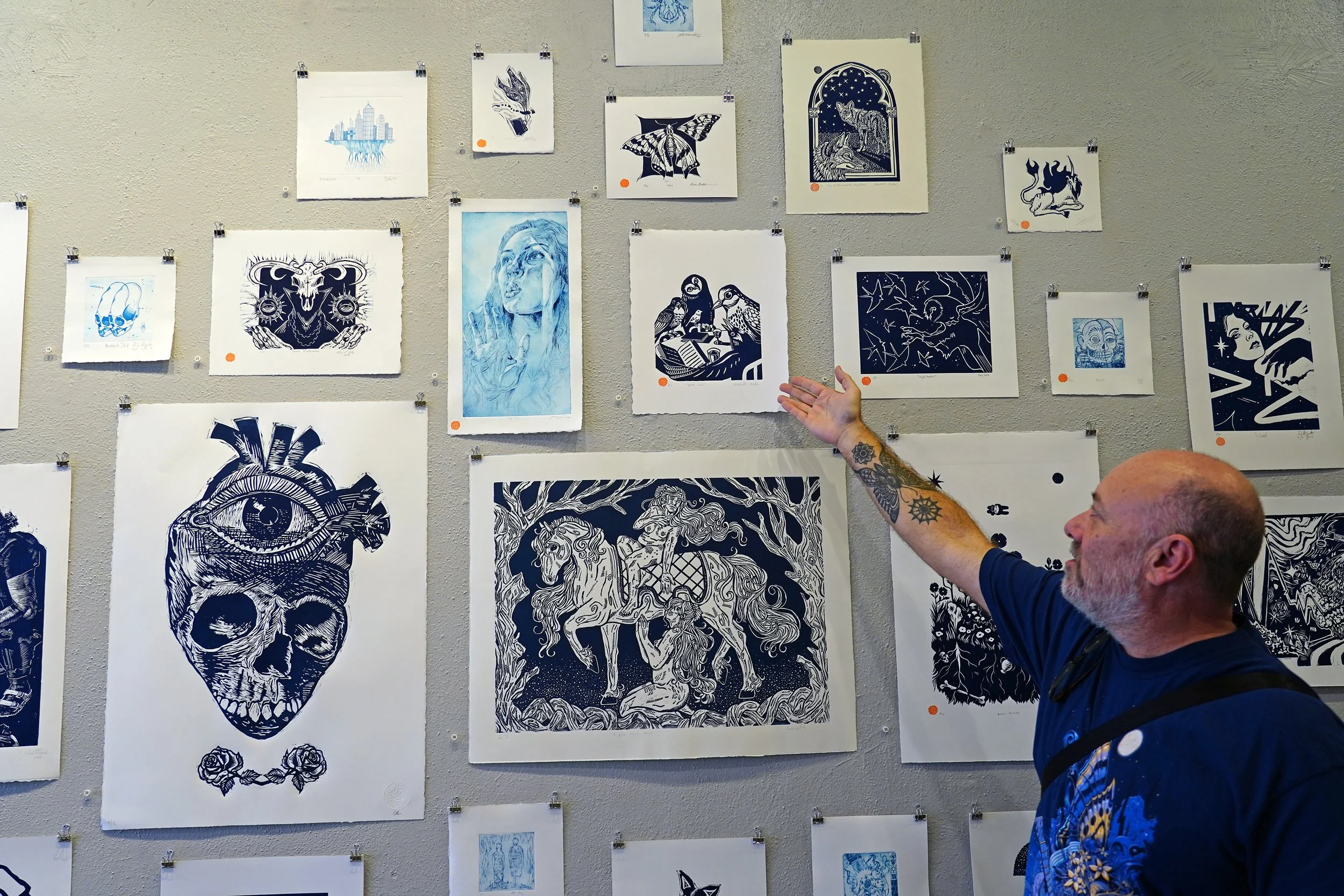
"Rare Woods: Jeff Soto and Friends" runs through Oct. 31 at Pain Sugar Gallery in downtown Riverside. It collects 44 prints Soto made on the press in his Riverside studio with 21 artists, all past or present RCC students or art faculty.
His paintings and murals are rooted in graffiti, and he has shown in galleries and museums in the United States and abroad, including a 2008 solo exhibition at the Riverside Art Museum. He is no stranger to prints. His screen-printed gig posters were the subject of "Potatostamp," a 2017 retrospective at the same museum. Carving and pressing by hand was another matter. He had "tinkered with some things," he said, "but didn't really know how to do it."
Jeff Ribaudo, an old friend who now teaches on the RCC art faculty, introduced him to the medium about 15 years ago. Two years ago Soto bought a press. His normal routine of teaching and gallery shows kept him from learning how to use it.
The sabbatical gave him the time. It also met a need in the studio art and illustration department, where Soto is an associate professor and co-chair. RCC has one printmaking instructor, and none of its full-time art professors had expertise in the medium.
"I've just really been wanting to learn printmaking," Soto said. "It's something I haven't ever truly explored."
He learned his own press first. He pulled three or four prints and had some failures. Then he began inviting artists in. Some were accomplished printmakers. Others had never made a print. Each session took two or three days in his warehouse studio, through spring and into summer.
"Every one of these, I learned something because they were all so different," he said.
Local artist Cosmé Cordova showed him a reliable way to ink an acrylic plate, a step Soto had struggled with. The last print off the press was, he said, "the cleanest print that I've been able to make."
Not every experiment went to plan, and some accidents turned out well. One of the most talked-about pieces in the show was never meant to be art. It is a paper towel Soto ran through the press to clean off the ink.
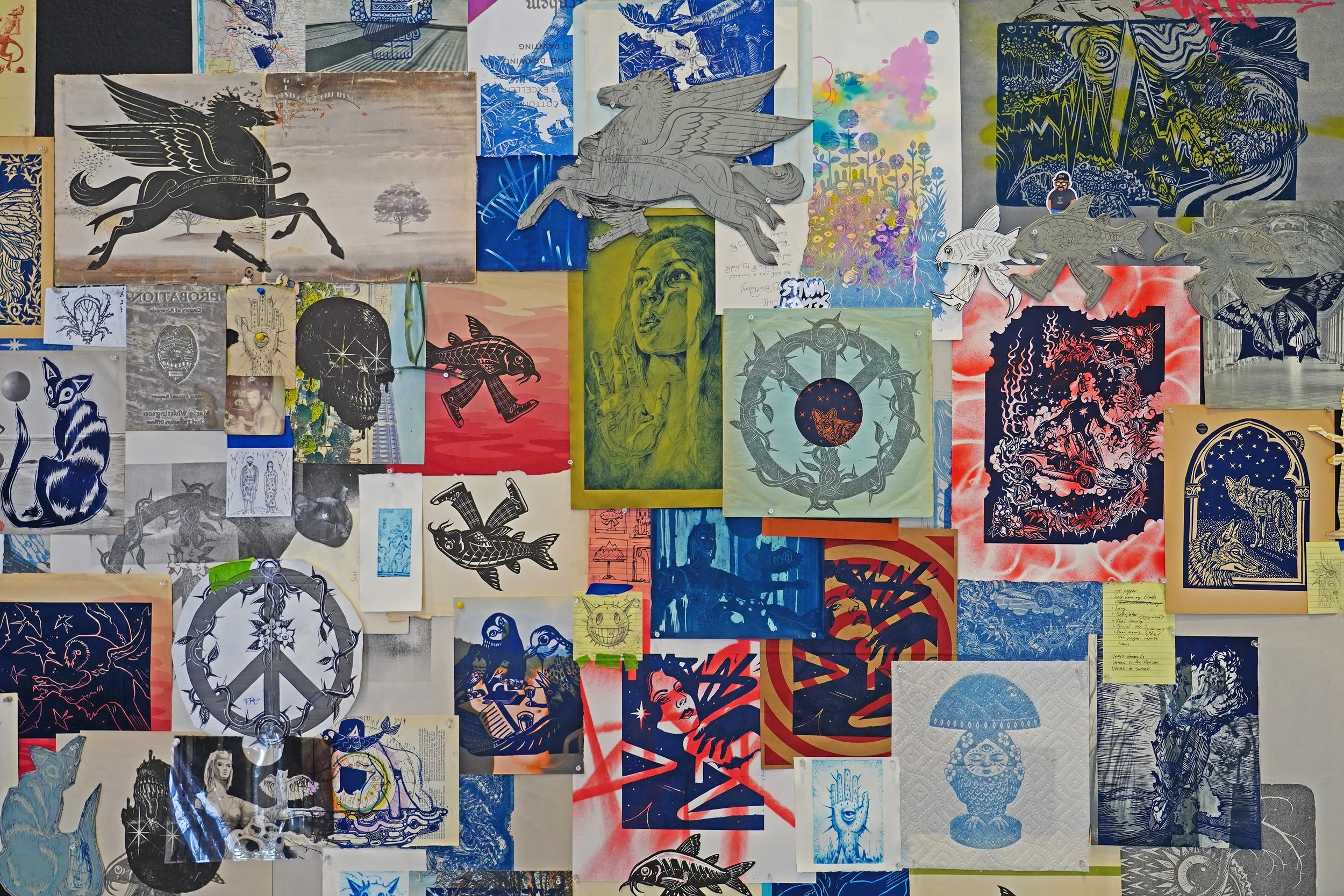
Photo By: Zach Cordner
Soto carried subjects from his long-running repertoire into the new medium, among them owls, bats, and his signature Sotofish character. "I've definitely painted bats before. Definitely paint owls," he said. The ability to clear the schedule and focus on the new medium during sabbatical allowed for accelerated progress, his prints grew sharper. "There's a lot more detail. It's cleaner."
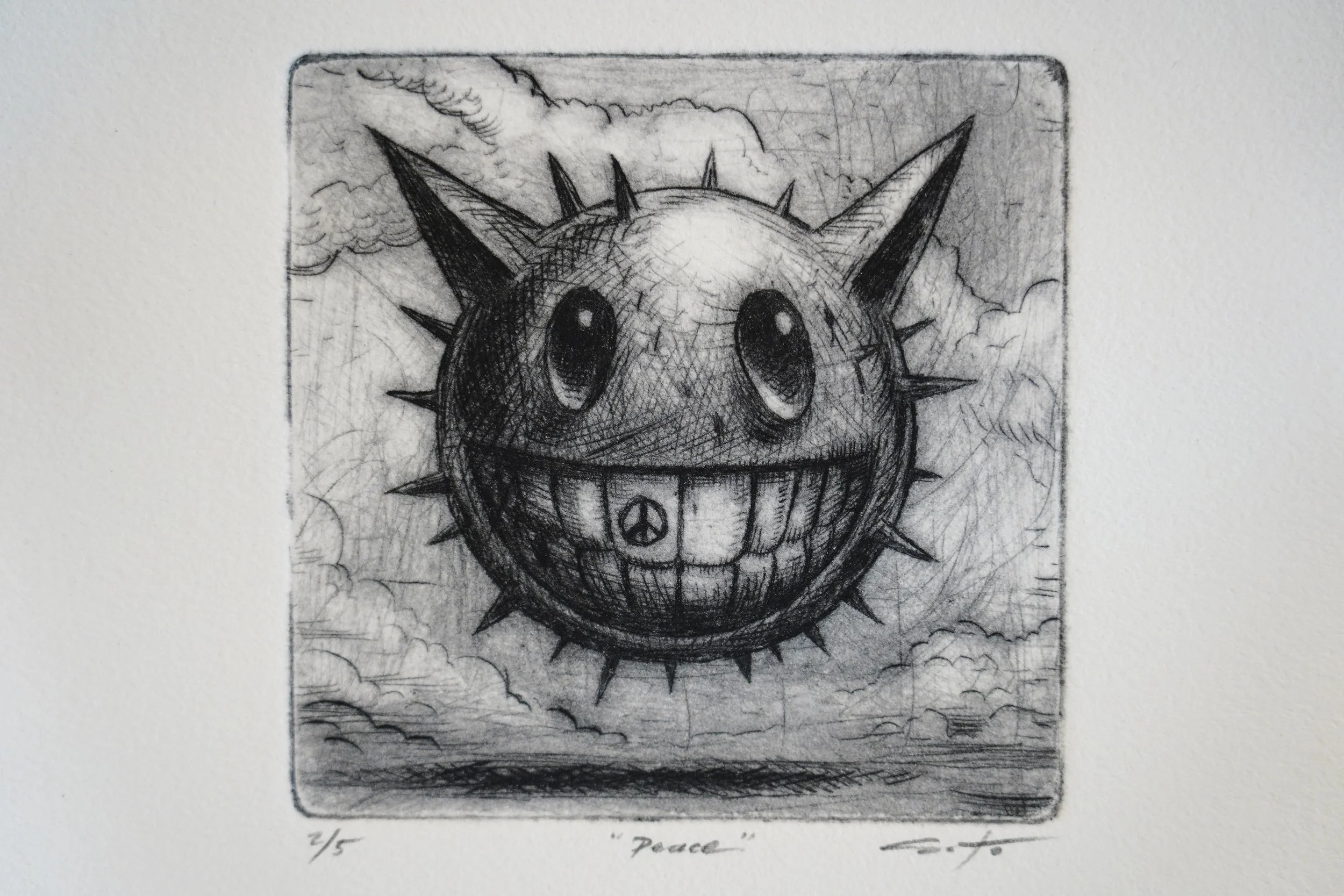
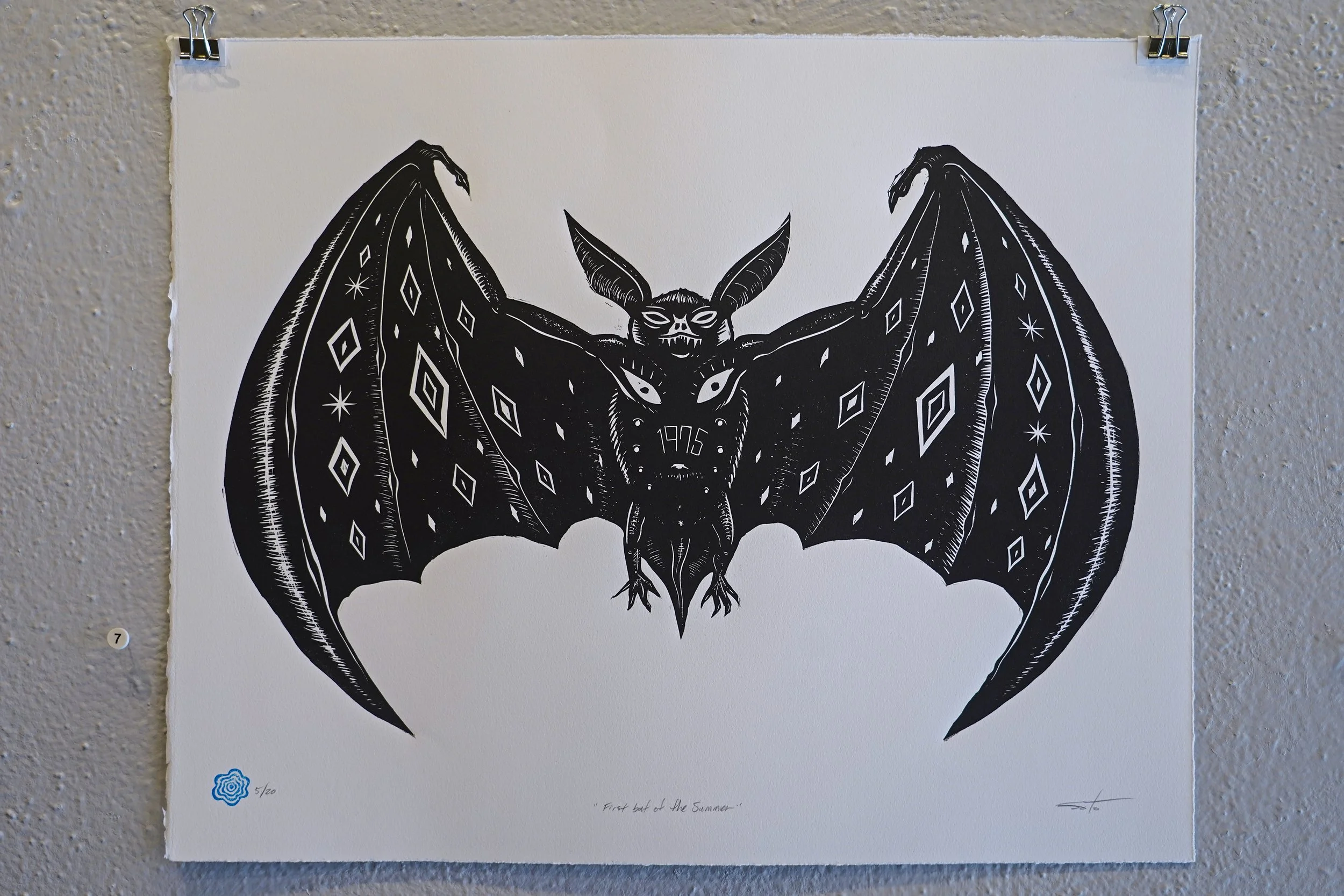
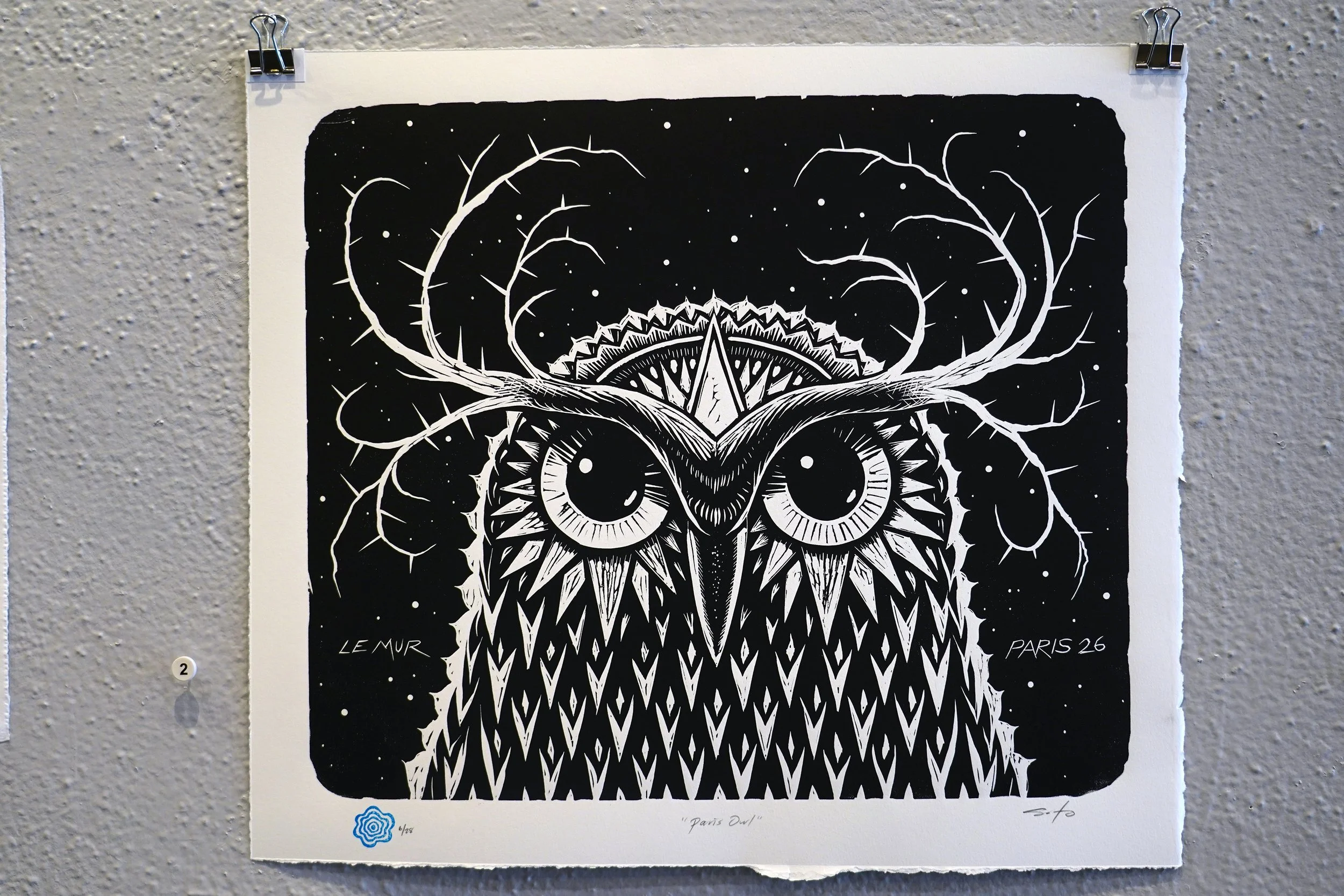
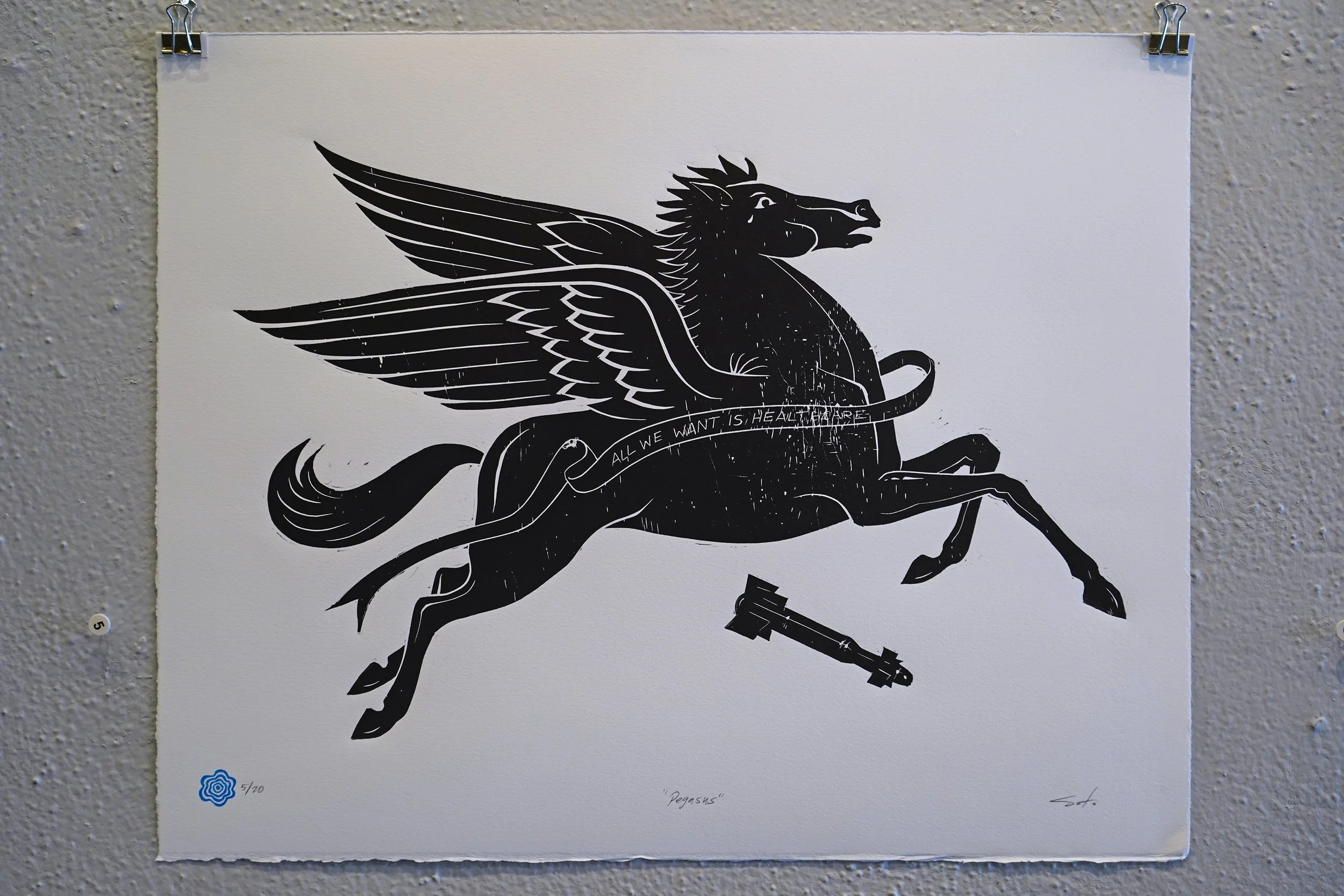
A few prints in the show are political, which fits the medium's history.
"Printmaking is a way to create a lot of multiple images of something," Soto said. "It's been used traditionally for political advertising, pamphlets, and protest art."
He pointed to woodblock printing, which has served as propaganda for centuries, in the Soviet Union, in Mexico and elsewhere. Linocut, he said, is "pretty much the same as a woodblock." In Mexico City, the Taller de Gráfica Popular, founded in 1937, made linocuts and woodcuts for political causes for decades.
Soto remembered a "No Blood for Oil" print he saw in Riverside as a teenager, during the Gulf War. He came back to the idea this spring, amid the news about Iran. Not every print carries a message. "There's not necessarily a deep meaning behind everything," he said.
Ribaudo is among the 21 guest artists, alongside faculty member Matt Luther; alumna Agatha McIntyre, now in the MFA program at Cal State Fullerton; Hannah Stilley, whose "A Pale White Horse" anchors the center of one wall; and Soto's daughter, Shannon Soto, who is taking classes with him.
"The in-person exchange of ideas and the human connection we shared was as rare and beautiful as the artwork created," Soto wrote in his artist statement.
Prints sell for $20 to $225. Soto said the low cost lets people own original art they could not otherwise afford. Because each print is inked and pressed by hand, no two are identical. "There's something warm about them," he said.
"I'm going to be making prints going forward," Soto said. "If I do a show of paintings, I might have a wall of prints as well."
Photo By: Zach Cordner
