
Photo: Zach Cordner
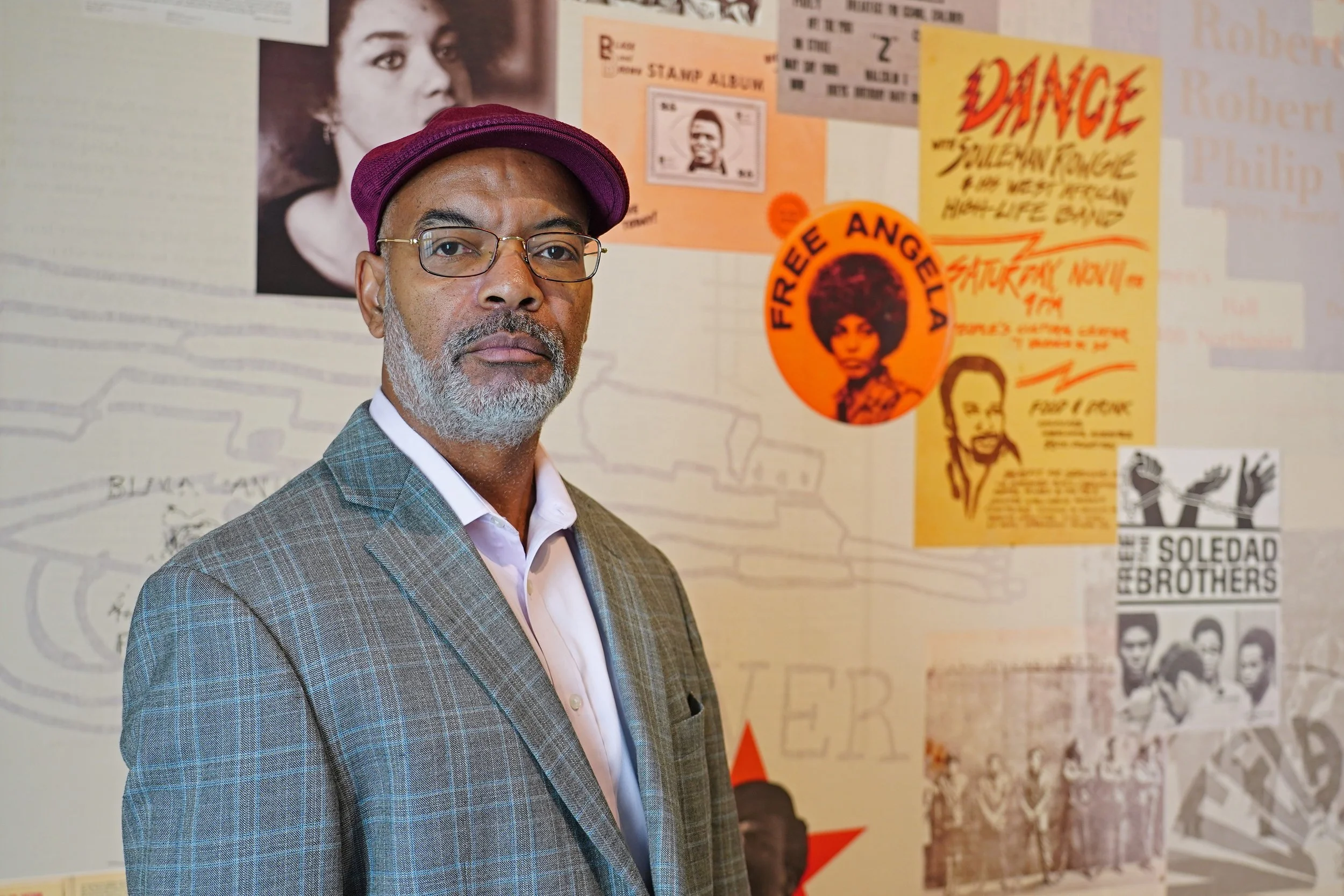
Drawing from his own collection, Richard Allen May III curated "Power to the People" at the Riverside Art Museum. The show includes 27 signed posters by Emory Douglas, the Black Panther Party's minister of culture, along with work by Faith Ringgold, Wadsworth Jarrell, Gerald Williams and Kevin A. Williams.
The show opened Oct. 17, days after the 60th anniversary of the party's founding in Oakland, and runs through April 11.
"The posters were designed to give people a solution," May said in the museum's announcement. "They're not just describing what's going on and what's happening and how horrible it is. Rather, they are showing folks how to solve the problem."
May places the Panthers beside the Rev. Martin Luther King Jr., not against him. "There were various streams leading to a larger river," he said, "which is freedom and equality and liberation."
The show makes one thing plain. The movement's image was a choice, and artists made it. This is a look at the posters and paintings on the wall, not an accounting of the party's history. That history is long and contested. The art makes its own argument.
Paper as a weapon
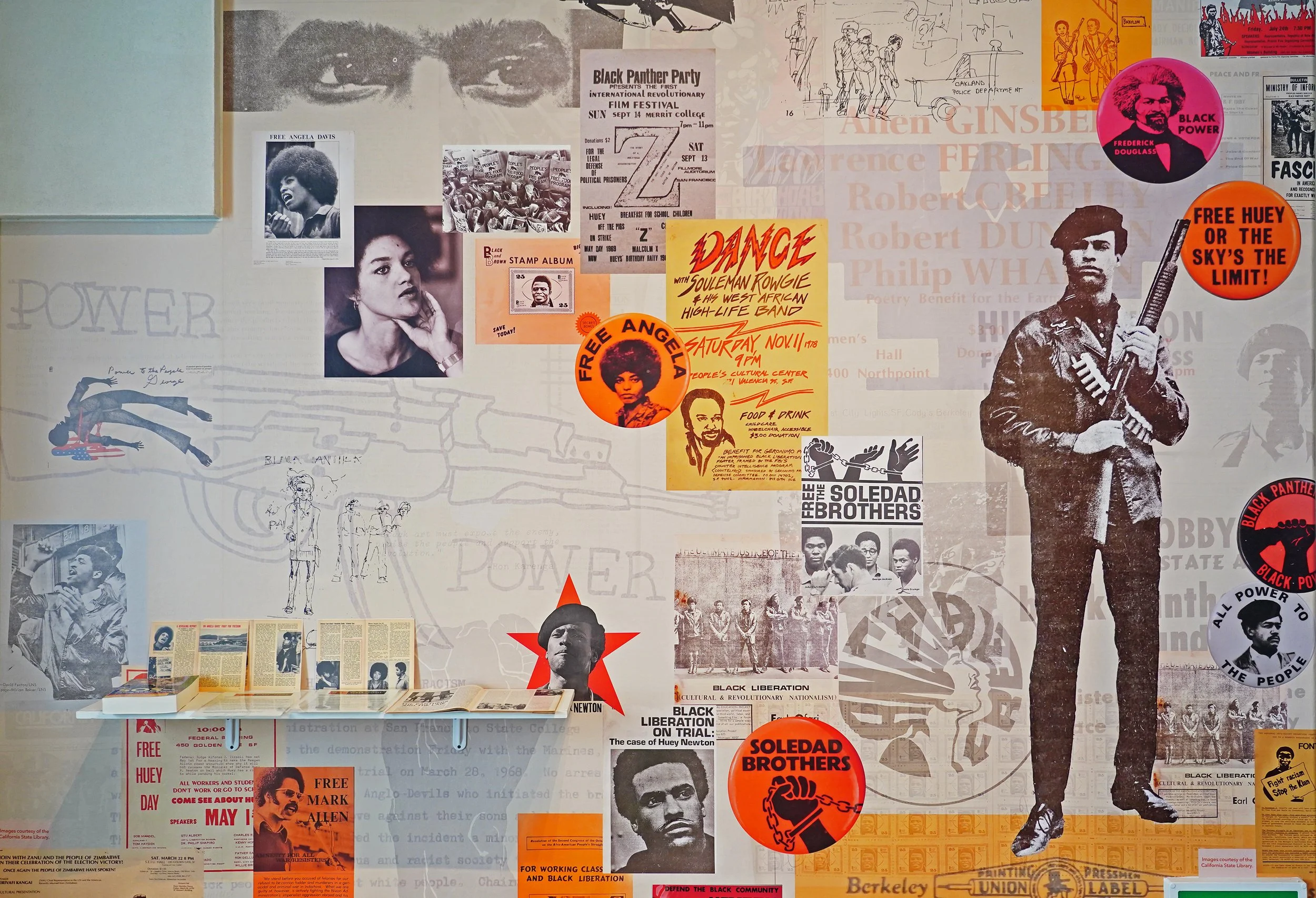
Photo: Zach Cordner
Revolutions have always run on cheap paper. Thomas Paine's "Common Sense" ran through some 25 editions in 1776. Paul Revere's engraving of the Boston Massacre turned a chaotic street fight into a scene of British soldiers firing on orderly colonists, and it still hangs in American textbooks.
The Panthers understood the power of availability. The party's newspaper, The Black Panther, first appeared April 25, 1967, after the police killing of Denzil Dowell in Richmond. Douglas joined that year with training in commercial art and ran the paper's art and layout until it folded in 1980. His posters often ran on the back page, made to be torn out and hung on a wall.
A wall panel quotes his aim: to inform the community and "tell our story from our own perspective."
The people in the frame
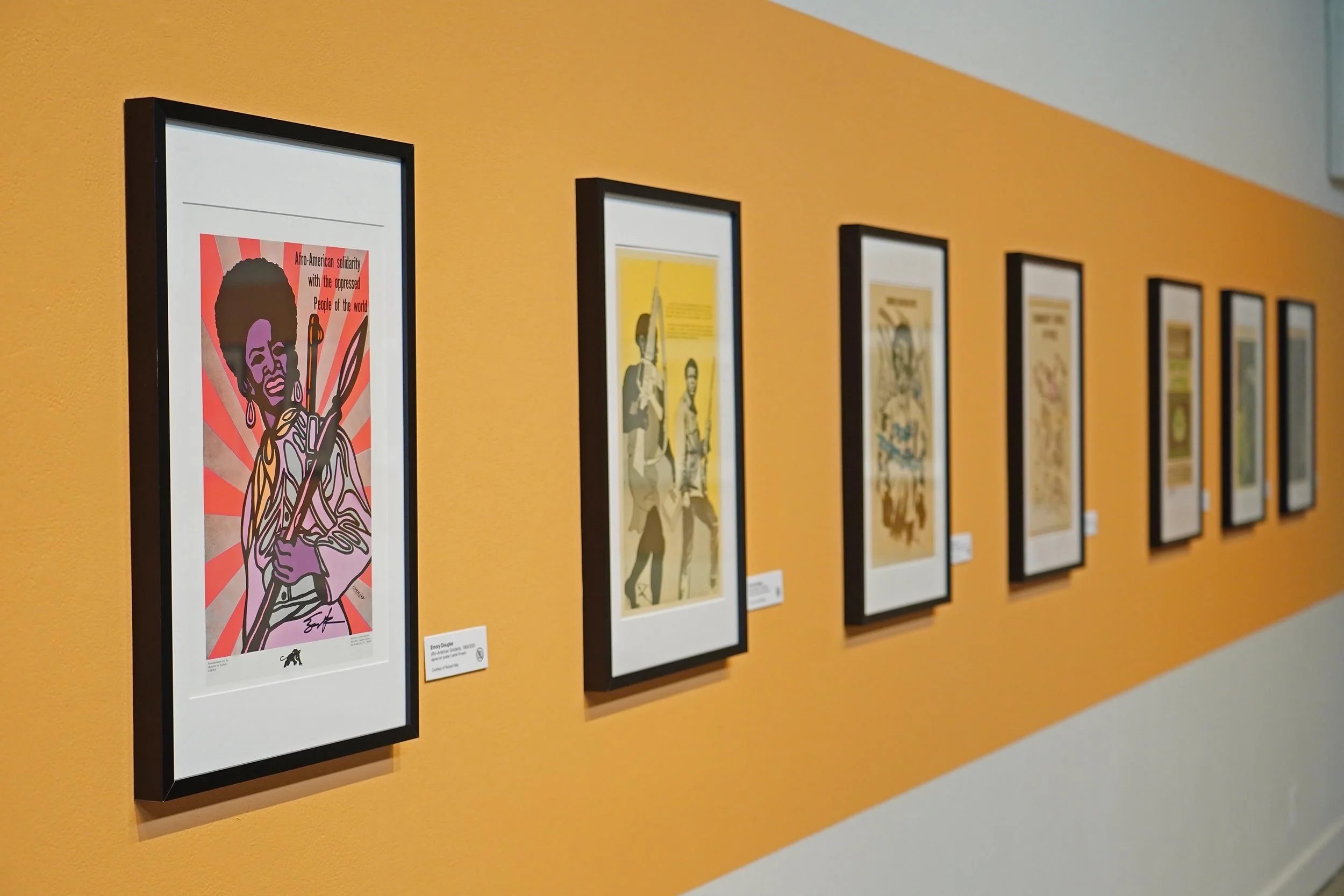
Photo: Zach Cordner
Douglas is known for drawing police as pigs, it is recurring but not dominant in his work. The bulk of his subjects are, the people of the neighborhood. He drew them with care, mothers, children and old men standing straight and holding the means to change their lives.
The clearest example is "Survival Pending Revolution." A woman in a nurse's cap stands at its center. Her cap reads "Peoples Free Health Clinics." She carries a dress from the party's clothing program, shoes from its shoe program, a book from its liberation schools and a sack from its food program. A revolver sits holstered at her hip, half hidden behind the groceries.
The didactic heavy-handedness of the aesthetic is forgivable. The culture that produced it was sincere, and the urgency was real. These artists were soldiers and medics in a war fought in their own neighborhoods.
Women at the center
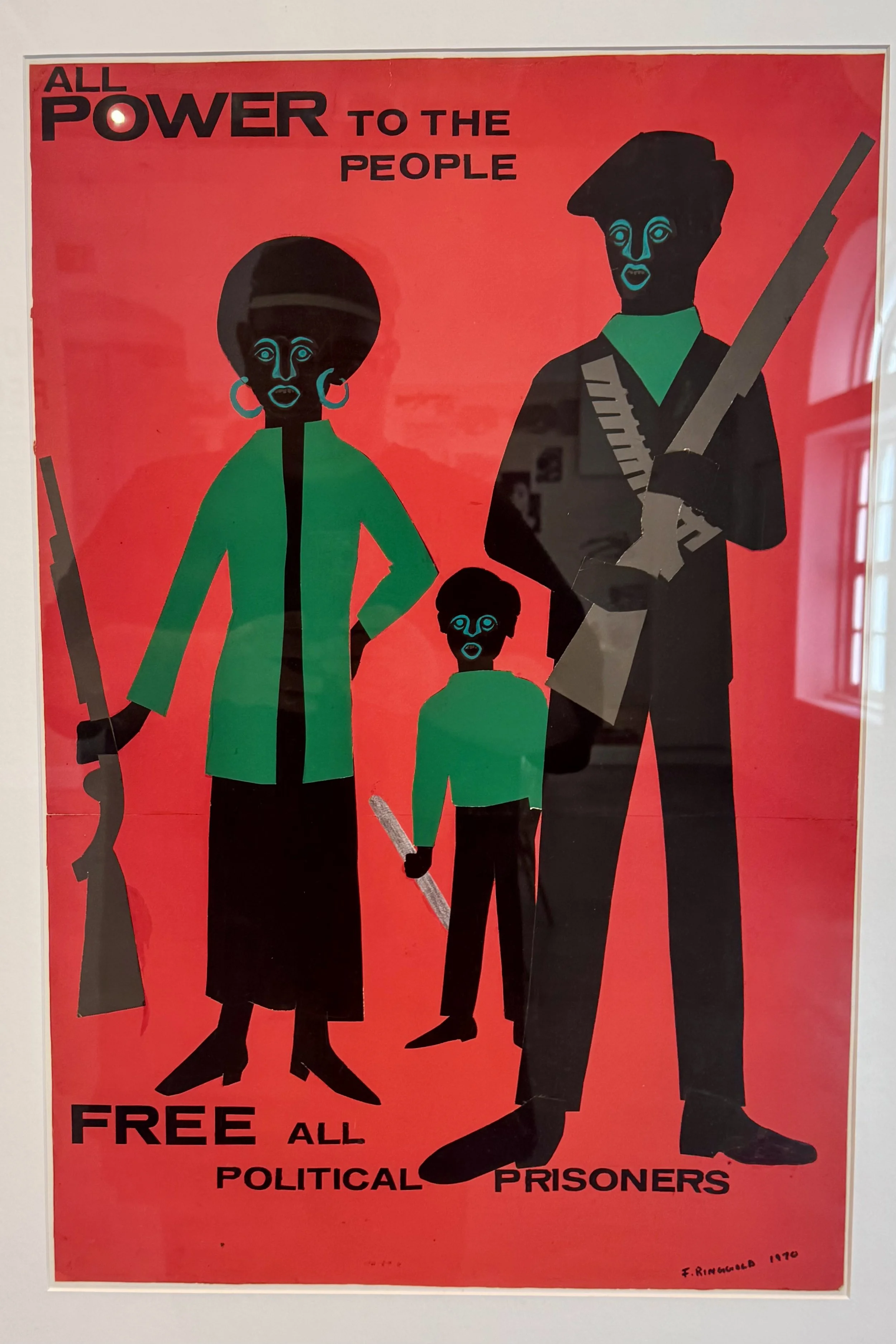
Photo: Ken Crawford
The nurse is not alone. Black women stand at the center of the strongest work in the room.
Faith Ringgold's 1970 poster "All Power to the People" shows a family on a red field. The father holds his rifle across his body, ready. The mother holds hers at her side, barrel down, her other hand on her hip. Defense is part of who she is, like the child beside her.
Kevin A. Williams' 2019 painting "Black Panther Queen" holds a shotgun upright like a scepter. Words from Assata Shakur run down the canvas: no people in history, she wrote, ever won freedom by appealing to the conscience of their oppressors. Wadsworth Jarrell's portrait of Angela Davis carries no weapon at all. Her image is built from words.
The art placed women at the center before the movement's leadership did. The museum's own label notes that Black women were sidelined inside the movement's hierarchy, and that Ringgold co-founded the collective Where We At Black Women Artists in 1971 to push back. Kathleen Cleaver has estimated women made up about two-thirds of the party's members by 1969. Elaine Brown led the party from 1974 to 1977.
The gun as symbol
Courtesy: Riverside Art Museum
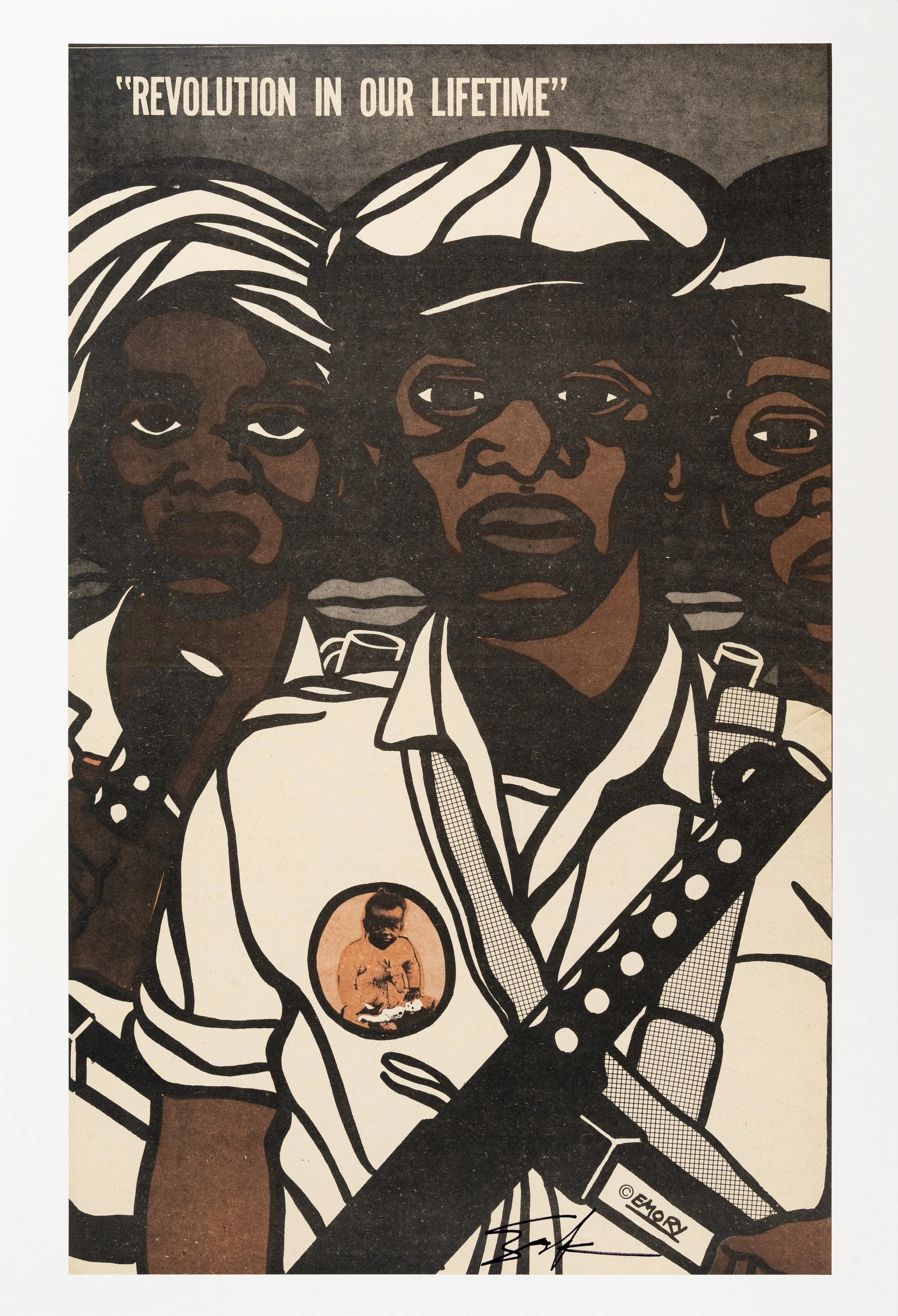
The Panthers carried guns, but the guns were as much a symbol as a tool. The imagery shows party was ready to protect what the country would not.
May draws the line to open carry today, in Texas and Arizona grocery stores. "It's like, I'm not advertising, but I'm telling you that if you cross the line, I'm ready," he said. "But for some reason, when you have African Americans, Black men doing that, it's taken a different way."
None of the figures on the wall plead. The nurse carries the programs herself. The mother waits for no one's permission. The power in these works belongs to the people pictured, not to the force they oppose. The message is self-reliance.
The frame also shifts with time. Douglas drew the woman on the breakfast line. Ringgold, in 1970, drew a family. Williams, in 2019, painted a legend. Each generation reframes the same movement, and the later frames turn history into myth.
Douglas's nurse still makes the clearest case. The revolver stays in its holster. Her arms are full of groceries.
The show
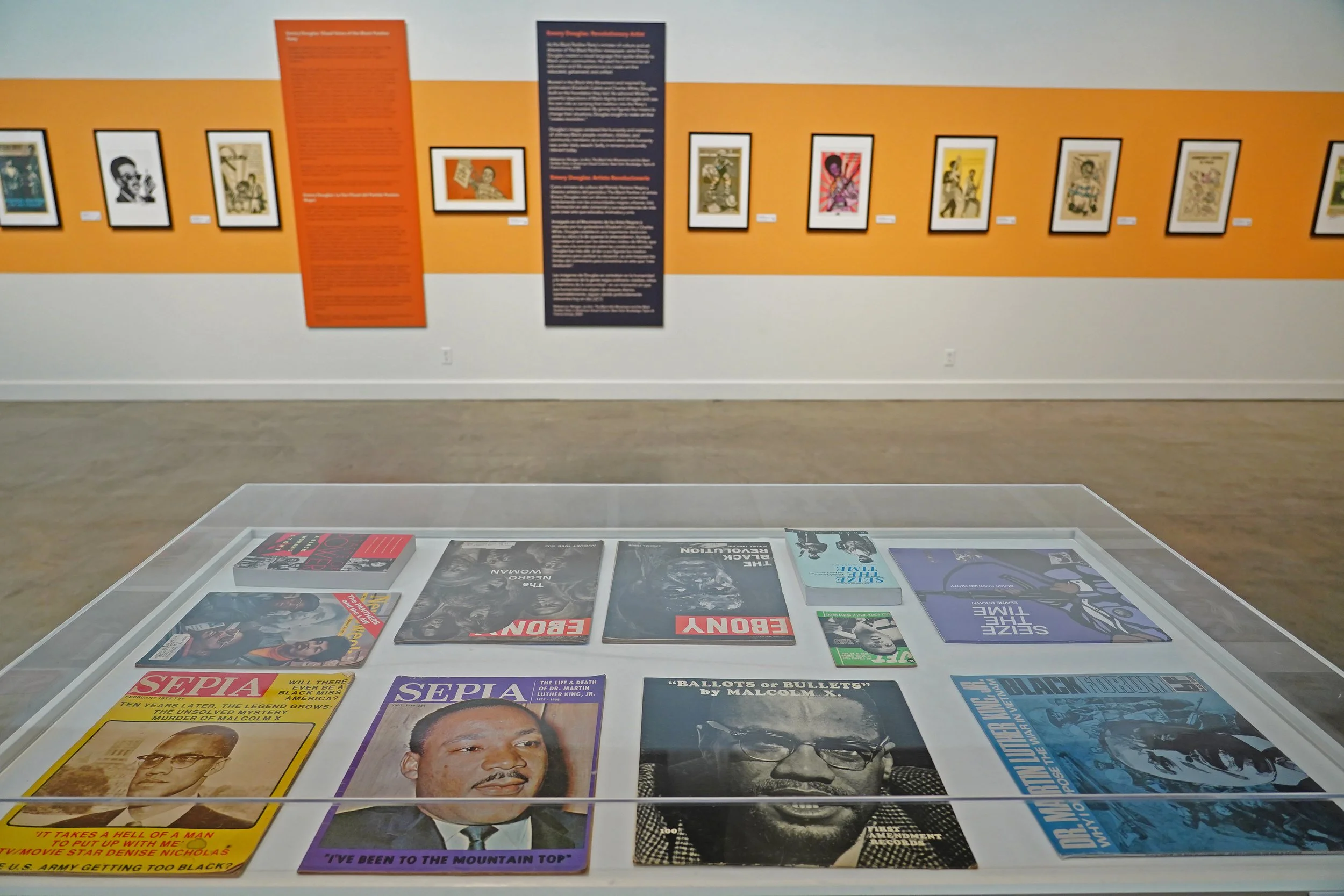
Photo: Zach Cordner
Annery Sanchez designed the exhibit, creating a minimal but intentional space where the work can speak. The message lives in the art and the interpretive materials on the walls. The design only needs to give it room.
A timeline runs from the mid-1960s through the late 1970s, with photographs, recordings and original issues of Ebony and Jet, also from May's collection.
May hopes the work sends people looking for more. "These posters are snapshots in history," he said during a walk through the gallery with Vivian Zavataro, who became RAM's executive director Oct. 1. "That will spark people, I would hope, to go to the library and read up more."
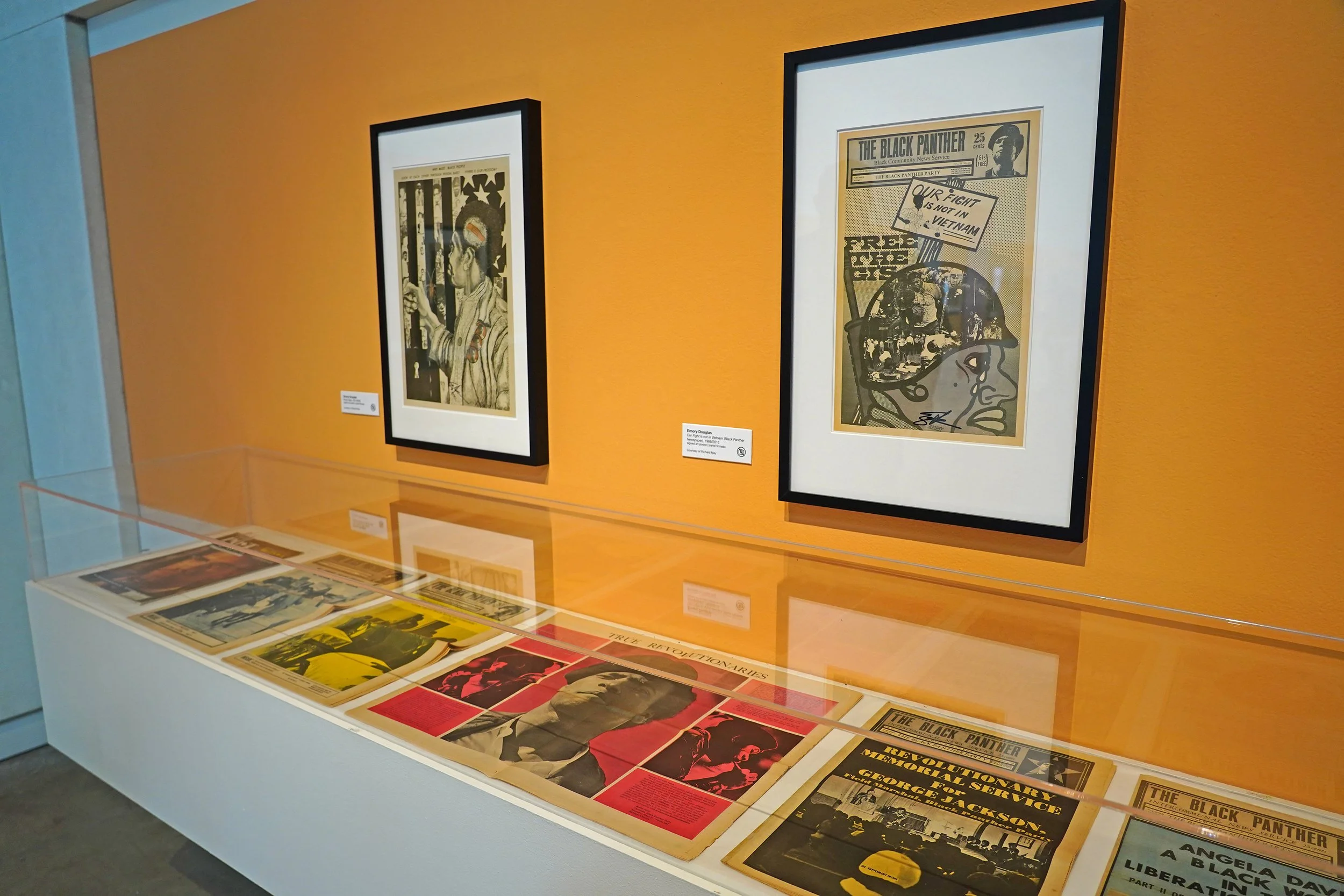
Photo: Zach Cordner
If you go: "Power to the People" runs through April 11, 2027, in the Art Alliance Gallery at the Riverside Art Museum, 3425 Mission Inn Ave. Admission is $17.95 for adults and $12.95 for seniors, educators, college students and ages 13 to 17. Children 12 and under and members get in free. Museums for All admission is $1 per person, for up to four people, with an EBT, SNAP or WIC card and photo ID.
